Diri Baba Mausoleum: When Rock Becomes Sacred
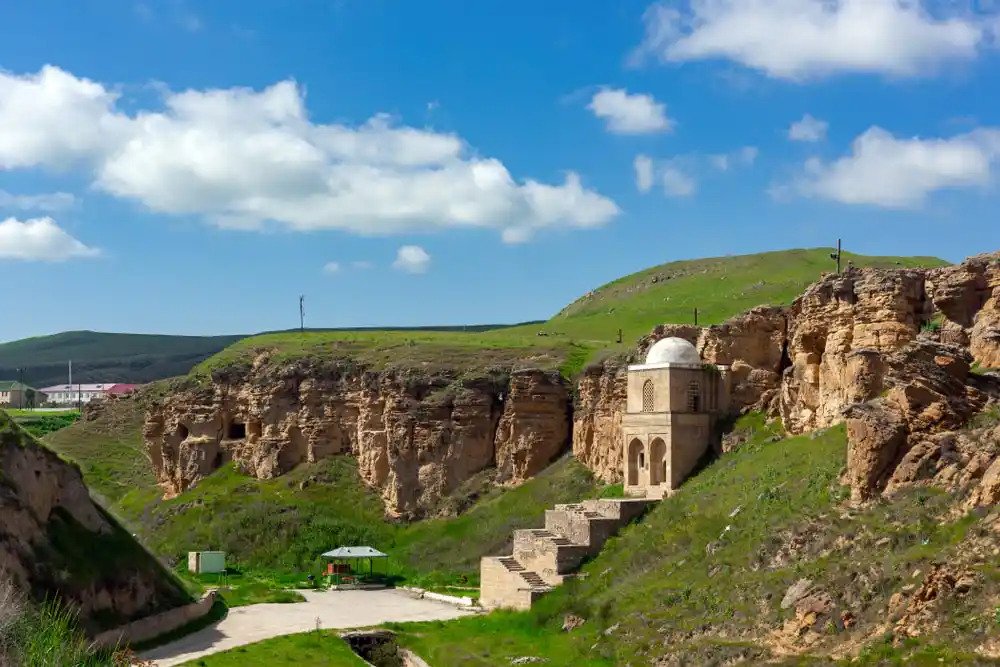
On the road between Baku and Shamakhi, in the ancient region of Gobustan, stands one of Azerbaijan's most enigmatic monuments. The Diri Baba Mausoleum is far more than a historical structure. It is a testament to faith that has nourished spiritual seekers for centuries. It is a place where architecture converges with mysticism, where stone speaks of eternity.
This monument dates to 1402-1403 - nearly 625 years ago. It was erected by order of Shirvanshah Ibrahim I, a powerful ruler of the Shirvanshah state, who understood the importance of immortalizing the memory of a saint. But what truly makes this mausoleum unique is its architectural solution: it is not simply constructed beside a cliff face, but literally carved from within the rock itself, like a precious gem set in a stone frame.
The Legend of Diri Baba and Its Mystical Allure
The name "Diri Baba" translates to "living elder" or "immortal elder." This name is no accident - it is connected to one of the most intriguing legends passed down through generations of Azerbaijani people.
According to tradition, here lies buried a saint named Diri Baba, whose body remained incorruptible after his death. This is not merely a historical claim - it is a legend in which local inhabitants believed sincerely, a belief that nourished their faith. They told of a saint so righteous that even death could not touch his flesh, that his body remained untouched by the ravages of time.
This legend transformed the Diri Baba Mausoleum into a place of pilgrimage. From the 17th century onward, believers came here - local residents, merchants, travelers - hoping to receive spiritual blessing, healing, or aid. They brought offerings, left gifts, prayed before this sacred sanctuary.
The mausoleum is surrounded by numerous legends and mystical tales. People spoke of miracles occurring near the tomb. Of healings that seemed medically impossible, yet occurred through prayer to the saint. Whether true or not, these stories created an aura of sanctity that has persisted around the mausoleum to this day.
Architecture Carved into the Living Rock
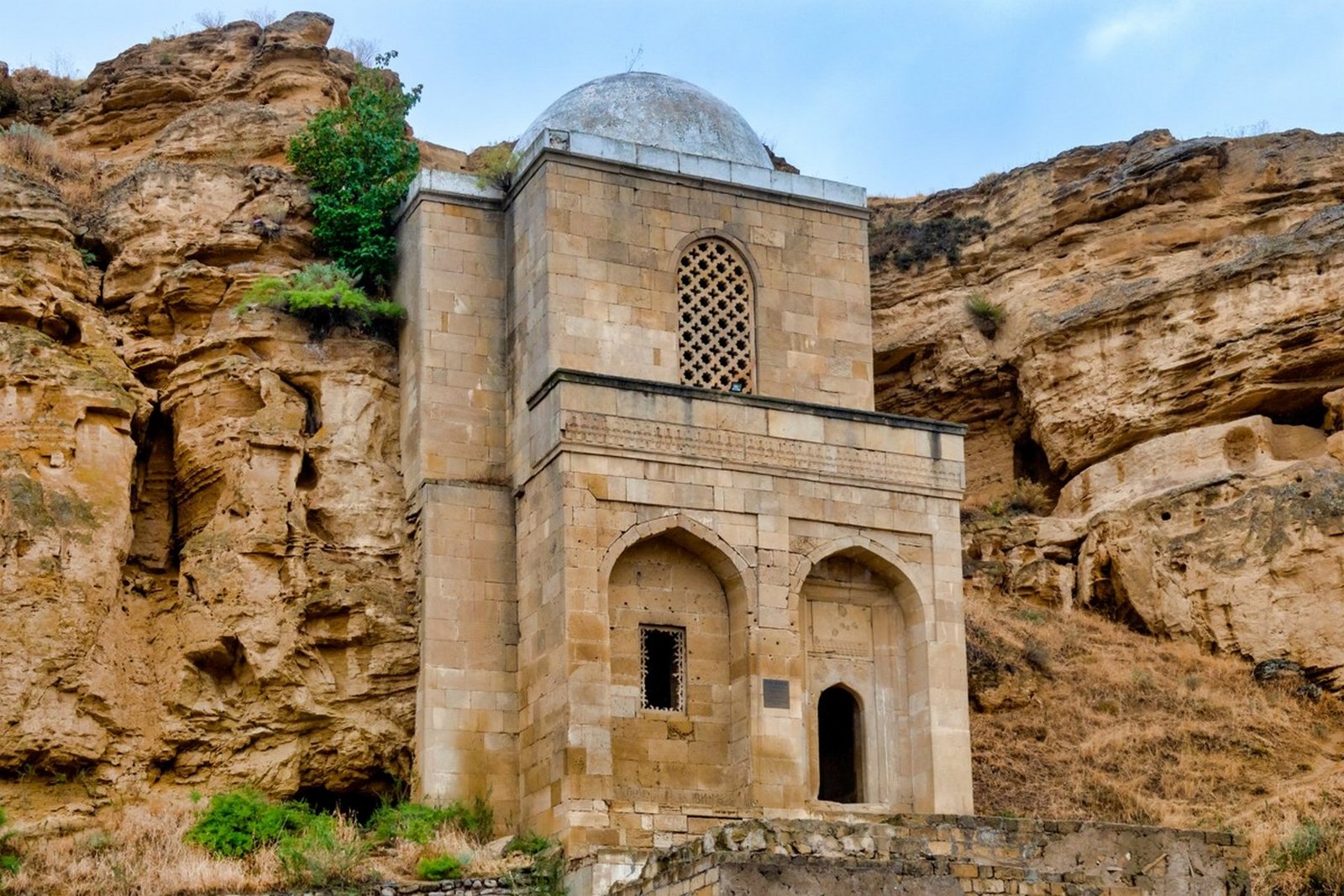
The Diri Baba Mausoleum is an architectural marvel of the 15th century. The structure is two-storied, with each level telling its own story. The first floor consists of a hall covered by a pointed vault - a characteristic element of Islamic architecture from that period. Adjoining this hall is a small vestibule topped with an octagonal dome, serving as a transition between the outer world and the inner sanctum.
But the most striking feature is the entrance itself. When constructing the mausoleum, architects carved a staircase directly into the rock face, leading to the second story. Each step represents an act of ascension - a symbolic and physical journey toward the spiritual realm. Climbing this staircase means literally rising toward the sacred.
The second story contains the main mausoleum chamber. Here, according to legend, rests the tomb of the saint. This space is filled with a sacred silence that is impossible not to feel upon entering.
The decorative elements of the mausoleum demonstrate the exceptional skill of medieval master builders. Between the levels runs a carved frieze adorned with stylized botanical ornaments. On one inscription fragment, the construction date has been preserved - the 805th year of the Hijra (1402-1403 AD) - along with part of the architect's name: "son of master Hajji." These inscriptions speak not only of the date but also that the builder was a renowned and respected master craftsman of his time.
The mausoleum's architecture belongs to the Shirvan school - one of the most developed architectural traditions of the Caucasus. This means its design reflects the finest practices of Islamic architecture of the period, adapted to local conditions and materials.
At the Crossroads of History and Trade
The location of Diri Baba Mausoleum is no accident. It stands on one of the medieval world's most important trade routes - along the Great Silk Road. This meant that for centuries, merchants, travelers, and pilgrims from all corners of the world passed through this place.
Many left records describing the mausoleum in their diaries and travel journals. Dutch traveler Cornelis de Bruyn and German scholar Adam Olearius described this structure in the 17th century. Their descriptions helped preserve for history information about the mausoleum, its architectural features, and the veneration paid to this sacred place.
Later, Russian Caucasian antiquities scholars Ivan Bartholomew and Bernhard Dorn made special studies of this monument. Dorn established precise dates of construction and the connection to the reign of Shirvanshah Ibrahim I. His work transformed the Diri Baba Mausoleum from a local shrine into an object of scholarly interest to world history.
The Atmosphere of Place: Mystique and Silence
Visitors to the mausoleum often describe the same impression - a particular atmosphere that pervades the space. This is not merely an architectural sensation. It is a sense of presence of something greater than stone and construction.
Inside the mausoleum reigns an extraordinary silence. Sounds from outside seem distant, as if the rock absorbs them. The air feels thick, saturated with history. When you stand in the second chamber, before the saint's tomb, you feel the weight of time - centuries of prayers, pleas, beliefs crashing down upon you.
Some visitors describe this as a "spiritual heaviness" - not in the sense of oppression, but in the sense of the sacred's presence. As if the stone walls have absorbed every prayer ever spoken within these walls, and now these prayers hover in the air, perceptible to sensation but not to logic.
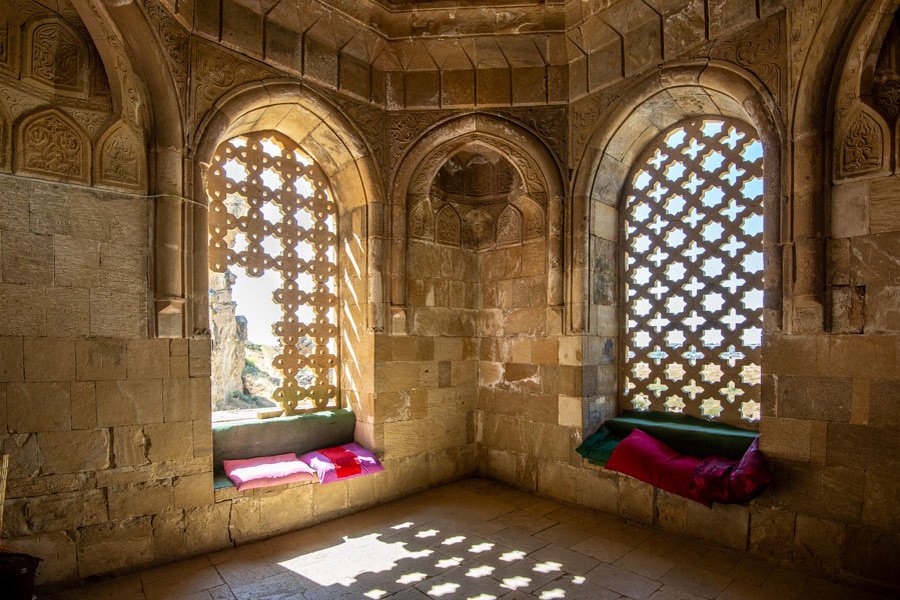
The mausoleum's architecture contributes to this sensation. The narrow staircase leading upward creates a sense of pilgrimage. The domes and vaults direct your thoughts toward heaven. The windows, carved into the rock, admit light as if it were something special, holy light meant to illuminate the sacred.
Tours Around the Regions of Azerbaijan: A Path to Mystical Heritage
Tours around the regions of Azerbaijan that include a visit to the Diri Baba Mausoleum offer travelers an encounter with something far greater than a mere tourist attraction. They offer an encounter with Azerbaijan's spiritual heritage, with the beliefs and traditions that have shaped this people's culture for centuries.
The mausoleum lies between Baku and Shamakhi, in the Gobustan region, known for its rich history and unique natural monuments. It is a place where history lives not in museums but in landscapes, in stone, in the very air. Here one can feel how medieval people lived, what their beliefs were, what hopes inspired them.
What makes the Diri Baba Mausoleum particularly fascinating is that it remains a mystery. Who was Diri Baba in reality? Was he a saint who came from the East? Was he a local saint revered in the region? Why was his body believed to be incorruptible? Was this a scientific phenomenon misinterpreted, or a spiritual truth comprehensible to the faithful?
There are no definitive answers to these questions. Historians and scholars offer different theories, yet none fully explains the legend. And in this uncertainty lies part of the mausoleum's charm. It is a place that invites you to contemplate, to seek your own answers.
Tours in Azerbaijan that include Diri Baba typically offer guides who know the legends and history of the place. They recount tales of pilgrims who came here, of miracles said to have occurred. They explain the architecture, historical significance, and cultural context.
The Diri Baba Mausoleum is not merely a monument to the past. It is a place that speaks to the present. It is a location where you can touch Azerbaijan's spiritual heritage, understand how ancient people perceived the world, how they believed, how they sought the sacred.
Standing before the saint's tomb, you realize that the 625 years that have passed have not changed the essence of humanity's yearning for the sacred. People still search for meaning, still believe in miracles, still come to such places filled with hope.
If you are planning tours in Azerbaijan and wish to see not only modern attractions but feel the spiritual pulse of this ancient land, the Diri Baba Mausoleum is a place you must visit. It is an encounter with history, with faith, with eternity itself carved from stone.
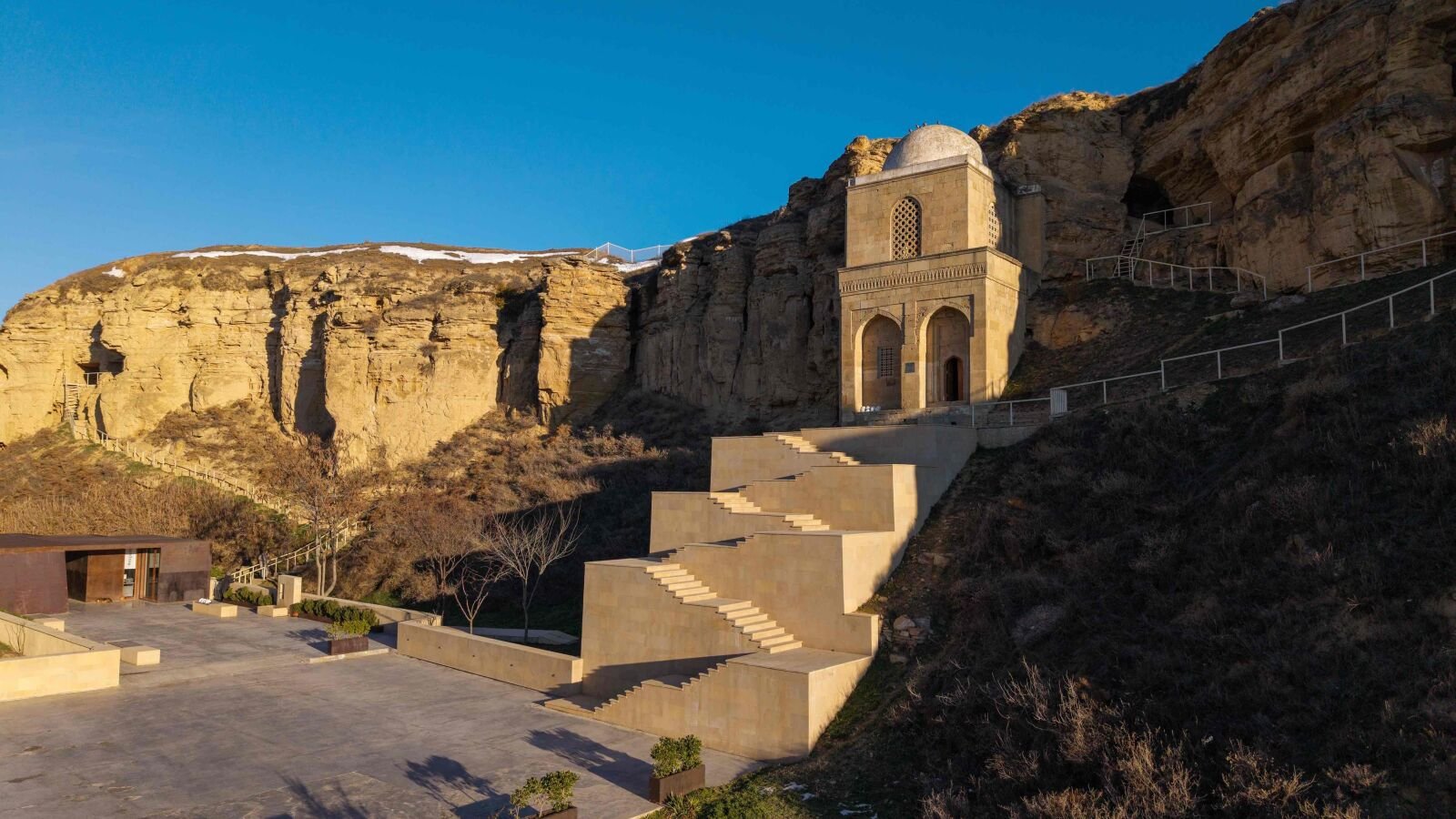
The Diri Baba Mausoleum is a place that those interested in Azerbaijan's history and culture absolutely should visit. It is easily accessible from Baku and can readily be incorporated into any travel itinerary through the country. It is an encounter with history, with faith, with eternity itself carved from stone. Here, before the saint's tomb, centuries converge into a single moment, and you feel a connection between past and present that cannot be found anywhere else.
Comments (0)
Leave a Comment